OSMOS X clears the Preliminary Design Review for its first space flight
The in-orbit demonstration of HPCR®, run with SpaceLocker, moves into detailed design ahead of a launch in 2027.
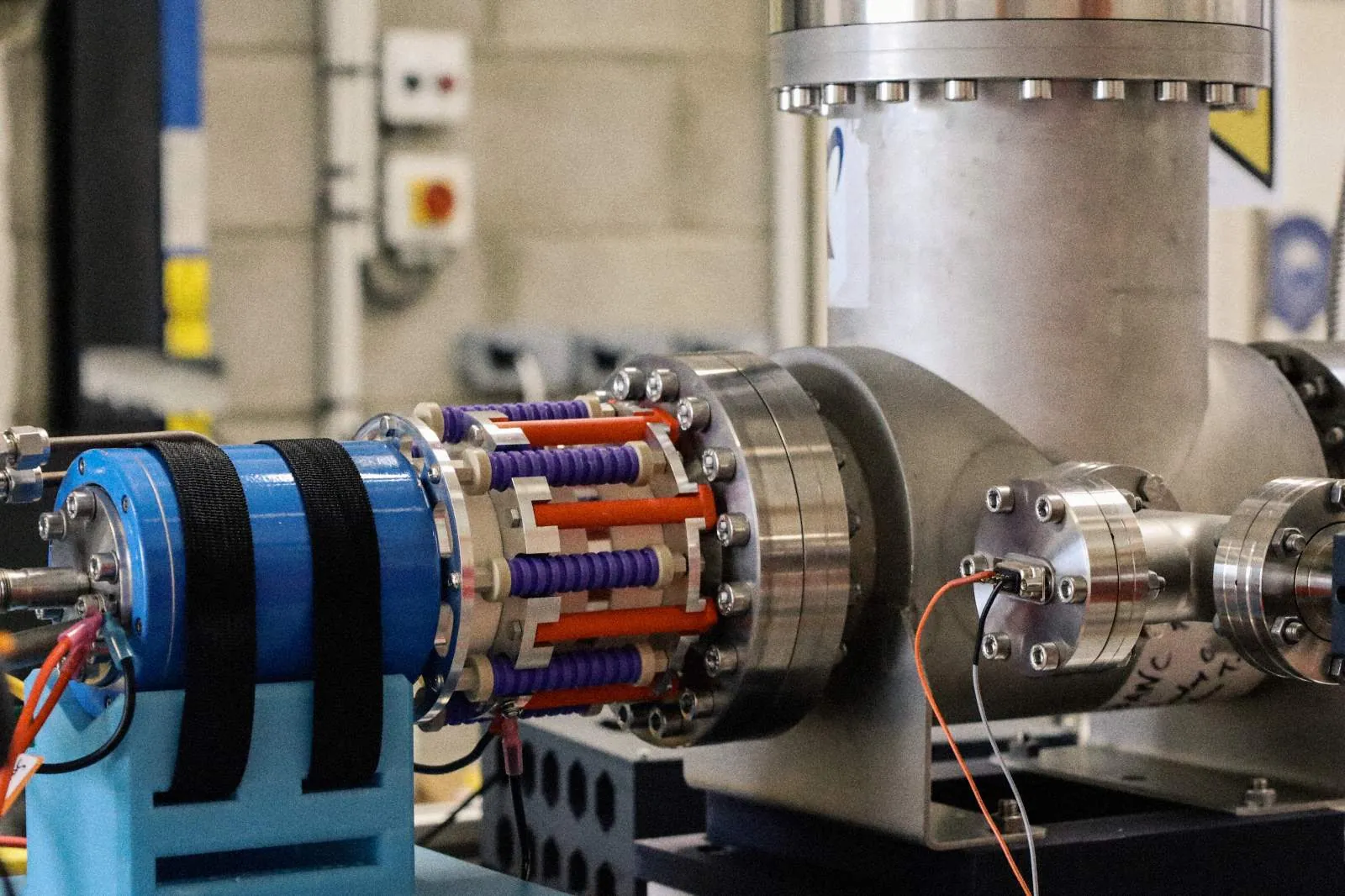
The Preliminary Design Review (PDR) of the in-orbit demonstration of OSMOS X's HPCR® technology, run in partnership with SpaceLocker, took place on 15 September 2026 and closed positively. It opens the detailed design phase of the thruster OSMOS X will put into orbit in 2027, a flight that will give the company its first flight heritage.
OSMOS X, a French operator of multi-mission orbital vehicles with high autonomy based in Bruz, near Rennes, and in Toulouse, runs this demonstration with SpaceLocker, a space infrastructure operator that hosts it. The thruster that will fly is a reduced-scale version of the high-autonomy electric propulsion architecture on which the company is building its fleet of vehicles.
A review held to industry standards
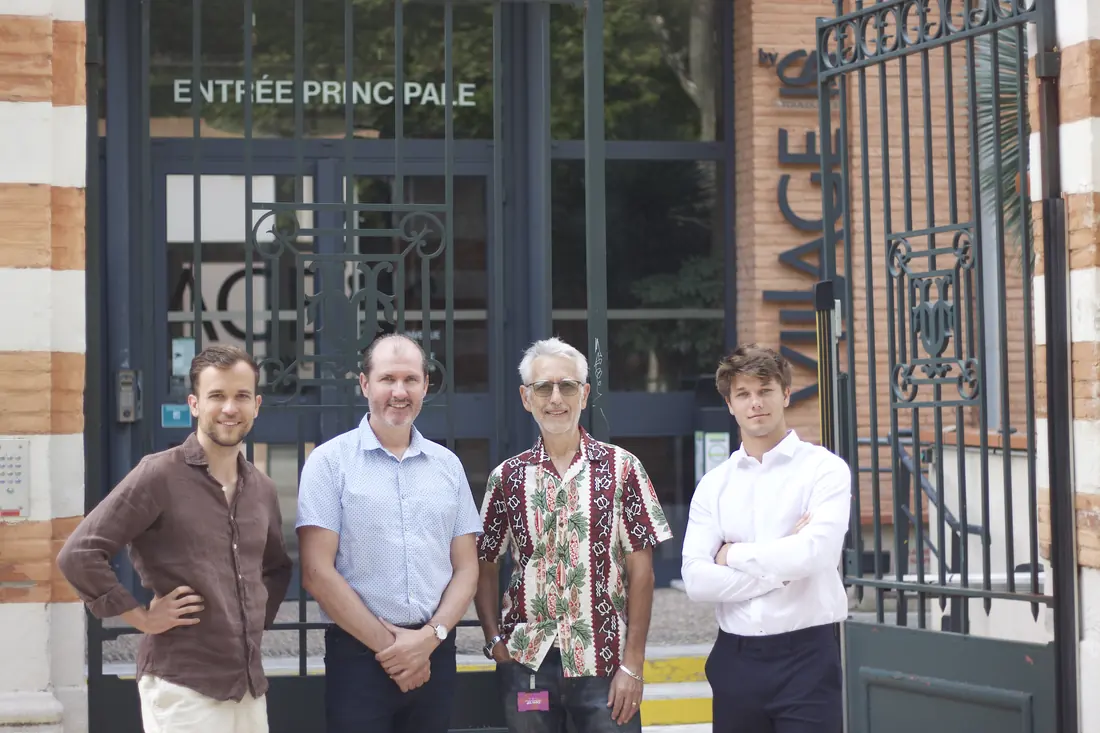
The PDR is the first major review in the development cycle of a space system. It checks that the preliminary design meets the mission requirements before detailed design begins. It covered the mission concept and objectives, operations, the mechanical pre-sizing of the payload, electrical interfaces, the environmental, mechanical and thermal-vacuum test plan, and the programme schedule. The project teams of both companies attended. For OSMOS X: Antoine Rescourio, Propulsion Programme Director, Julien Le Romancer, PMO, Arnaud Masson, CEO, and Michel Courtois, former Deputy Director General of the European Space Agency and member of the scientific committee.
A thruster redesigned for flight
The thruster that will fly was designed by OSMOS X from an ion source used in fundamental research, extensively reworked.
We started from a laboratory ion source, and we had to rework most of it to make it fit for flight. Two changes shaped this redesign. First, the extraction system was replaced. Then the antenna was redesigned for flight. On the ground, part of the source is cooled by natural convection, which does not exist in orbit, where every excess watt has to be radiated away. Making the antenna markedly more efficient was therefore a condition for flying. Some of the equipment this type of propulsion needs is still rare in Europe. We built that supply chain at the same time as the thruster.
Antoine Rescourio, Propulsion Programme Director
What this flight prepares
This work feeds the development of Thorus, the OSMOS X multi-mission orbital transfer vehicle, designed to operate from low Earth orbit to geostationary orbit. Thorus will be able to deliver satellites to their final orbit, compensate for injection errors or propulsion failures, extend the life of existing satellites, and carry out proximity inspections to diagnose satellites or characterise potentially dangerous space objects. Active debris removal is also among the targeted operations. These missions serve satellite operators, space agencies and institutional defence actors worldwide.
These prospects already rest on two European programmes. OSMOS X coordinates TAC, selected by the European Defence Fund under the SMERO call, which brings together seven partners in five countries. The company also coordinates ALBATOR, funded by Horizon Europe, on contactless interaction with a debris object using an ion beam. Both selections followed evaluation by independent experts.
In our business, the first question we are asked internationally is about flight heritage. Until a technology has flown in real space conditions, it remains a hypothesis. This flight will validate in orbit the performance of our HPCR® propulsion technology, on which we are building our fleet of vehicles, and it is a technology many players in the space sector are waiting for.
Arnaud Masson, CEO of OSMOS X
Passing a review is a major step in any space mission. At SpaceLocker, we are committed to giving ambitious projects like OSMOS X the best conditions for success. That means suitable tools, dedicated support and rigorous preparation of every element before flight, so that our users can focus on what matters most: their payload.
Théophile Lagraulet, CEO of SpaceLocker
Next steps
The two companies now begin the detailed design phase, which will be validated by a Critical Design Review (CDR) before integration and testing. Launch is planned for 2027.