
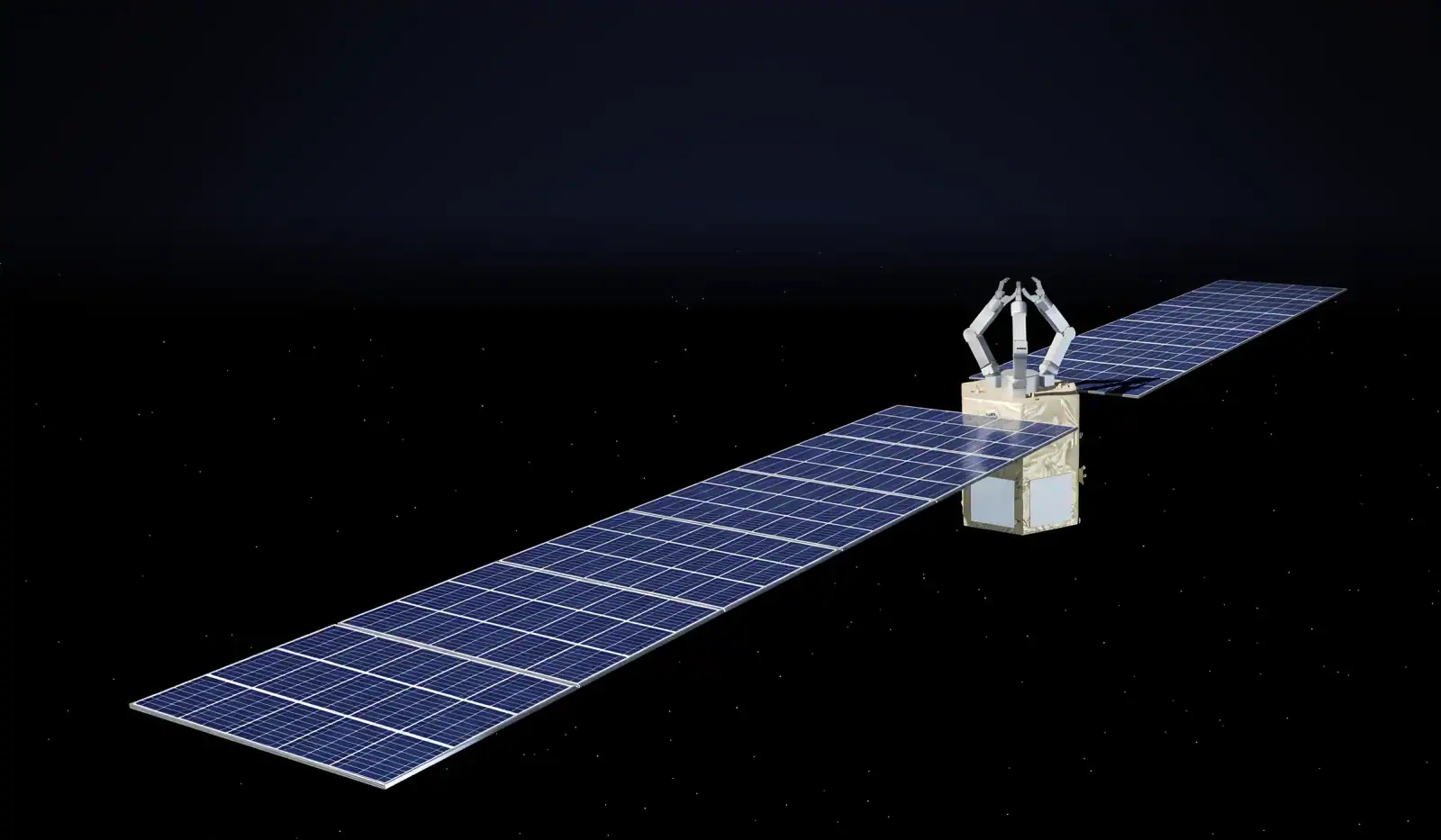
Thorus
A multi-mission orbital vehicle with robotic arms and HPCR® electric propulsion, designed to operate from low Earth orbit to geostationary orbit.
Built to stay in orbit
Thorus never comes back to Earth. It raises a satellite to its orbit, inspects an object, holds an ageing satellite in its slot, then waits in orbit for the next assignment.
The figures describe the target design. They will be refined through the reviews that follow the 2027 demonstration flight.
| Mission profile | Multi-mission, high autonomy in orbit |
|---|---|
| Orbit range | LEO to GEO, including MEO |
| Propulsion | HPCR® electric propulsion |
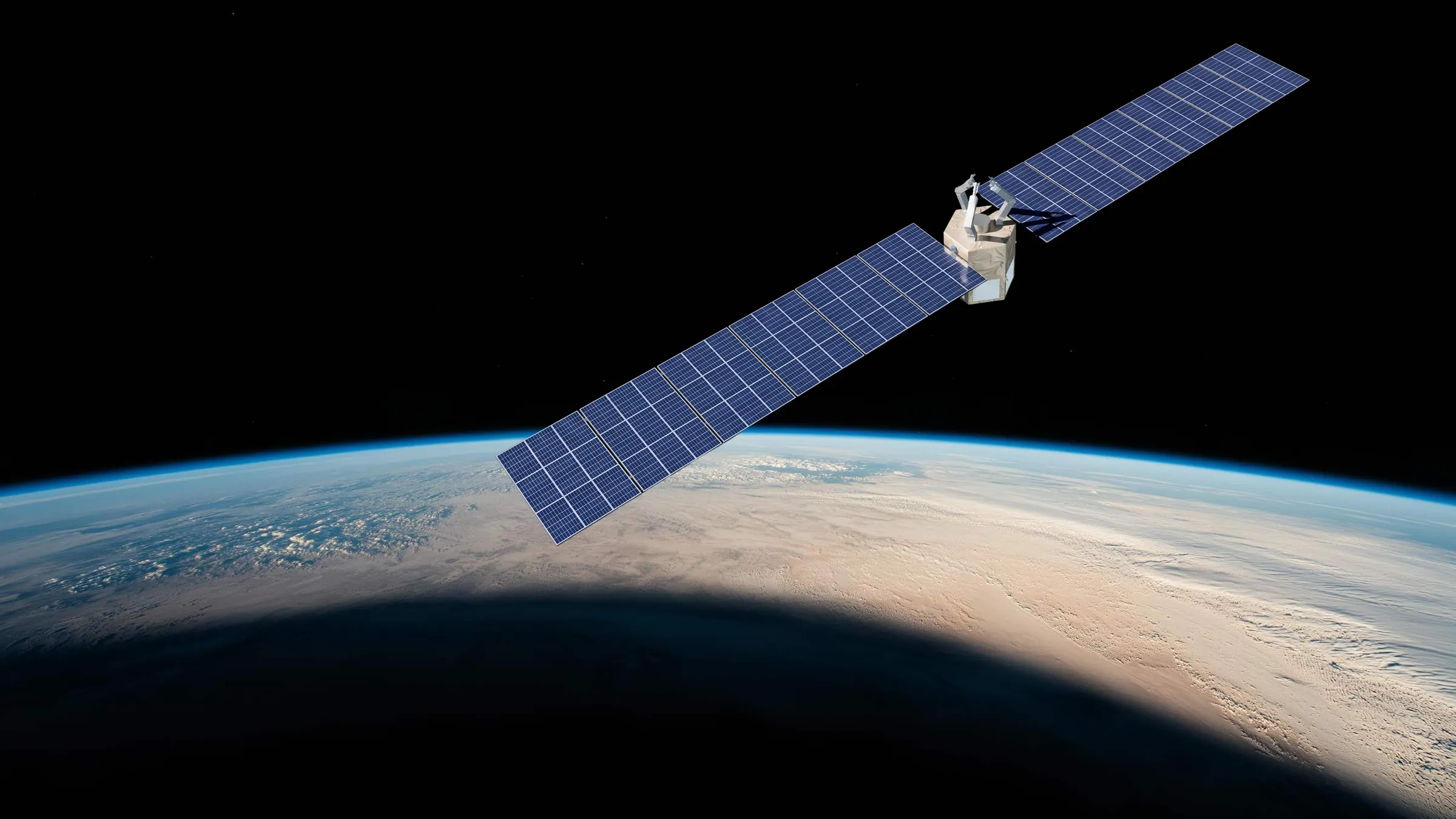
| Power | Solar arrays |
| Client satellites | 500 to 10,000 kg |
| Specific impulse | Above 5,000 s |
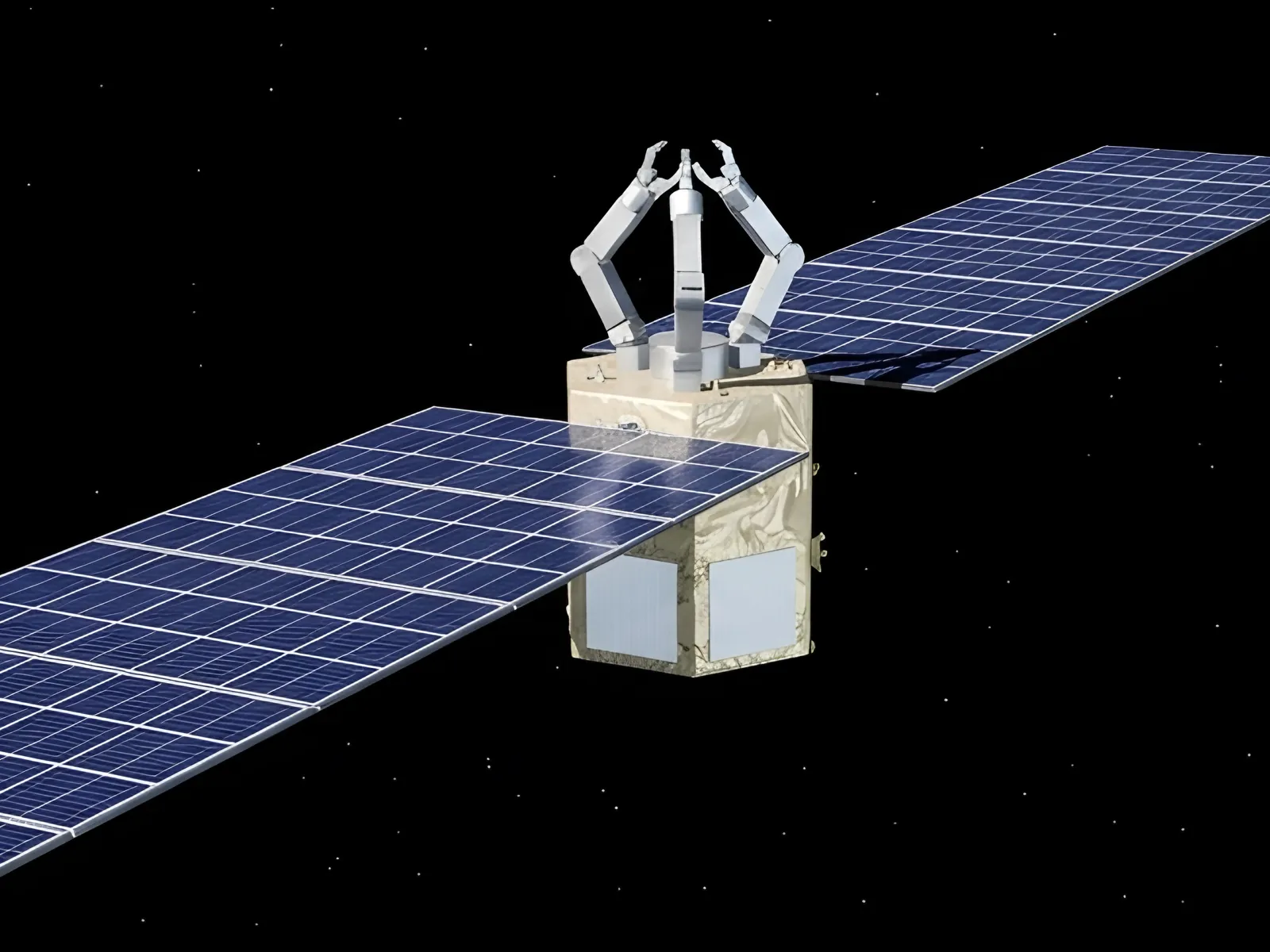
| Capture | Robotic arms |
| Design life | 5 years |
| Commercial operations | Around 2030 |
From the launcher to the operational orbit
Four steps take a satellite to the orbit where it will work. Thorus then moves on to its next client.

Separation
The launcher releases the satellite in low Earth orbit or in GTO, on a rideshare or a dedicated launch.

Rendezvous and capture
Thorus, already in orbit, meets the satellite and secures it with its robotic arms.

Transfer
HPCR® raises the orbit in a slow spiral. The satellite's own propellant stays in its tanks.

Release
Thorus releases the satellite on its operational orbit, then moves on to its next mission.
Power from the Sun, gas as reaction mass
The solar arrays power HPCR®. The gas on board is only the mass the thruster accelerates, so a small amount goes a long way and one vehicle can serve several clients.
Explore Thorus in 3D
Rotate the vehicle, deploy the solar arrays and fold or unfold the robotic arms that capture client satellites.
Three services on the same vehicle
Orbit raising
Launchers · Manufacturers · Operators
From the injection orbit to the operational orbit, GEO included. The satellite keeps its propellant for its mission.
Learn more02
Inspection & protection
Defence · Agencies · Operators
Close-range observation of objects in orbit, to diagnose a satellite or characterise an unknown object.
Learn more03
Lifetime extension
Satellite operators
Station-keeping and repositioning for satellites that still work but run short of propellant.
Learn more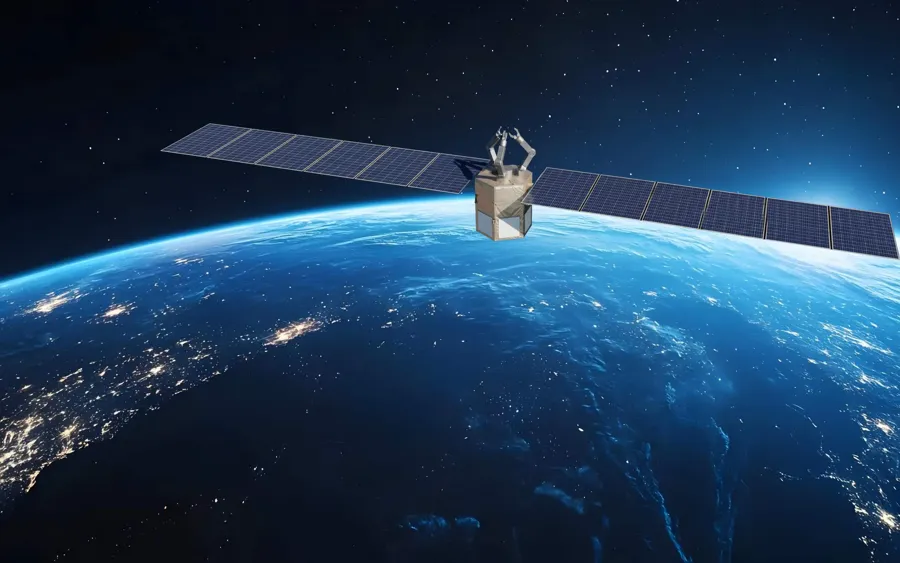

Let's talk about your mission.
Tell us about the satellite, the orbit it needs and your timeline. Our mission team comes back to you with a first assessment.