What is an orbital transfer vehicle?
Launchers deliver satellites to an orbit, rarely to the one they will work in. This guide explains what orbital transfer vehicles do between the two, and what to look at when choosing one.
In short
- An orbital transfer vehicle is a spacecraft built to move other spacecraft between orbits after launch. You will also see it called a space tug.
- Its main jobs are orbit raising, repositioning, lifetime extension and in-orbit inspection. Some vehicles are also designed to remove satellites at the end of their life.
- The choice of propulsion sets the balance between the duration of a transfer and the propellant the vehicle has to carry.
- Thorus, the vehicle OSMOS X is building, uses HPCR® electric propulsion and is designed to carry out many missions over its life.
A definition
An orbital transfer vehicle is a spacecraft whose payload is another spacecraft. It takes a satellite from the orbit where the launcher left it, or from the orbit where it has been working, and moves it to another one. The industry also uses the terms space tug, in-space transportation and last-mile delivery for the same idea.
Two broad designs exist. The first carries satellites from the launcher and releases them one by one along the way, a bit like a delivery round. The second meets a satellite that is already in orbit, secures it and moves it. Thorus, the vehicle developed by OSMOS X, belongs to the second family and can also take charge of a satellite right after it separates from the launcher.
Why satellites need a ride after launch
A launcher goes where its main customer needs to go. On a rideshare mission, the other passengers are released in that same orbit, which is usually a low Earth orbit (LEO) a few hundred kilometres up. Launches to higher orbits are rarer and more expensive, and large launchers are often booked years ahead for the deployment of large constellations. Small and medium satellites that need a higher orbit have few dedicated options.
A satellite can climb on its own, but the propellant it burns on the way is propellant it will not have later. Going from LEO to geostationary orbit (GEO) takes a velocity change, or delta-v, of about 3.9 km/s with a classic two-burn transfer. Holding a satellite in position in GEO costs around 50 m/s per year. In delta-v terms, the climb is worth more than seventy years of station-keeping.
With an orbital transfer vehicle, a separate spacecraft does the climb, and the satellite keeps its tanks for the mission it was built for.
What an orbital transfer vehicle does
Orbit raising
The best-known mission is taking a satellite from its injection orbit to its operational orbit, for example from LEO to GEO, or to the medium Earth orbit (MEO) used by navigation systems. Our guide to orbit raising from LEO to GEO details the routes and their cost.
Repositioning and lifetime extension
A satellite running low on propellant can be kept in its slot by a vehicle that docks with it and provides the thrust. The same vehicle can move a satellite to a new orbital position, or bring one released in the wrong orbit to the right one. See satellite life extension, explained.
In-orbit inspection
Before docking with anything, a vehicle has to approach it and look at it. That capability is useful on its own: an operator can get images of a satellite with an anomaly, and a government can check what is near a strategic asset. More in our article on in-orbit inspection.
End-of-life removal
At the end of its mission, a satellite should leave its orbit: down into the atmosphere from low orbits, or up to a graveyard orbit above GEO. A vehicle able to capture a satellite could do this for it. For Thorus this is a future capability, prepared by the TAC (Tactical-Capture) and ALBATOR research programmes that OSMOS X coordinates.
Chemical or electric propulsion
The propulsion of a transfer vehicle decides how fast it moves and how much propellant it has to carry. The figure that matters is specific impulse (Isp), measured in seconds: the higher it is, the less propellant a manoeuvre consumes.
| Propulsion | Specific impulse | Thrust | LEO to GEO |
|---|---|---|---|
| Chemical (bipropellant) | About 300 to 450 s | Newtons to kilonewtons | Hours to days |
| Electric (Hall effect) | About 1,500 to 3,000 s | Millinewtons | Several months |
Chemical engines give strong thrust for minutes, and a transfer to GEO can be done within days, at the cost of a lot of propellant. Electric thrusters ionise a gas and accelerate it with electric and magnetic fields. Their thrust is tiny, but they run for months and use several times less propellant. In 2017 the all-electric Eutelsat 172B satellite reached GEO four months after launch, with almost six times less propellant than a chemical transfer would have needed. It was a record at the time.
The two technologies work together. Launchers need chemical propulsion to leave the atmosphere. Once in orbit, electric propulsion takes over the long transfers, where saving propellant matters most.
How Thorus works
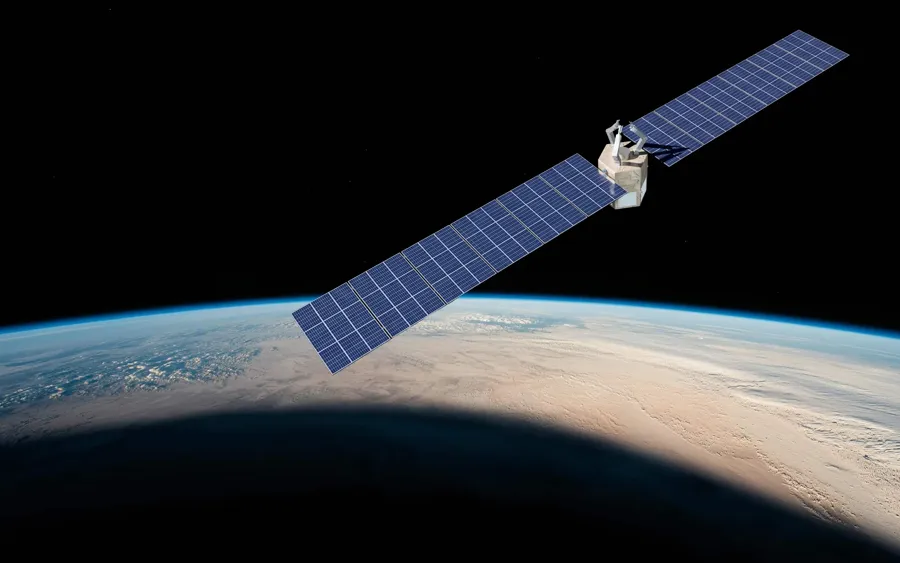
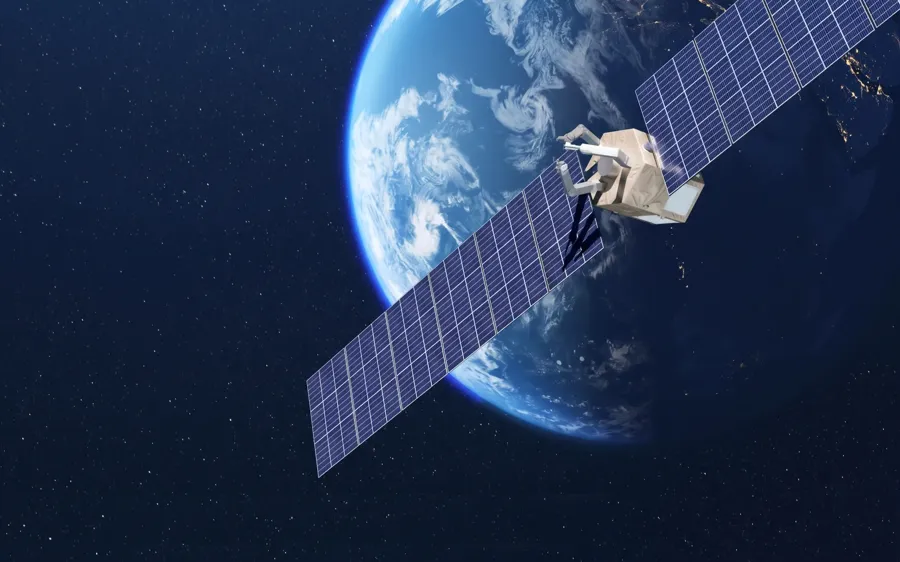
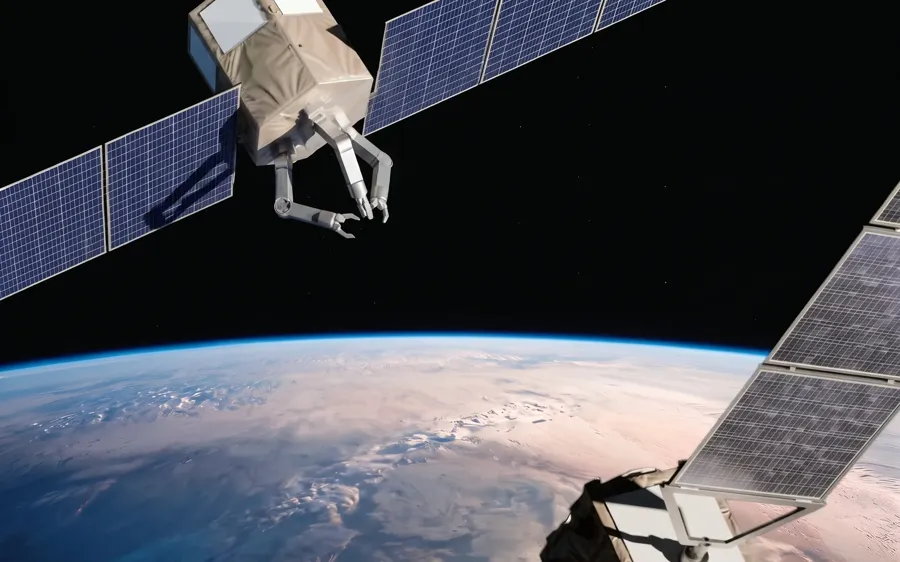
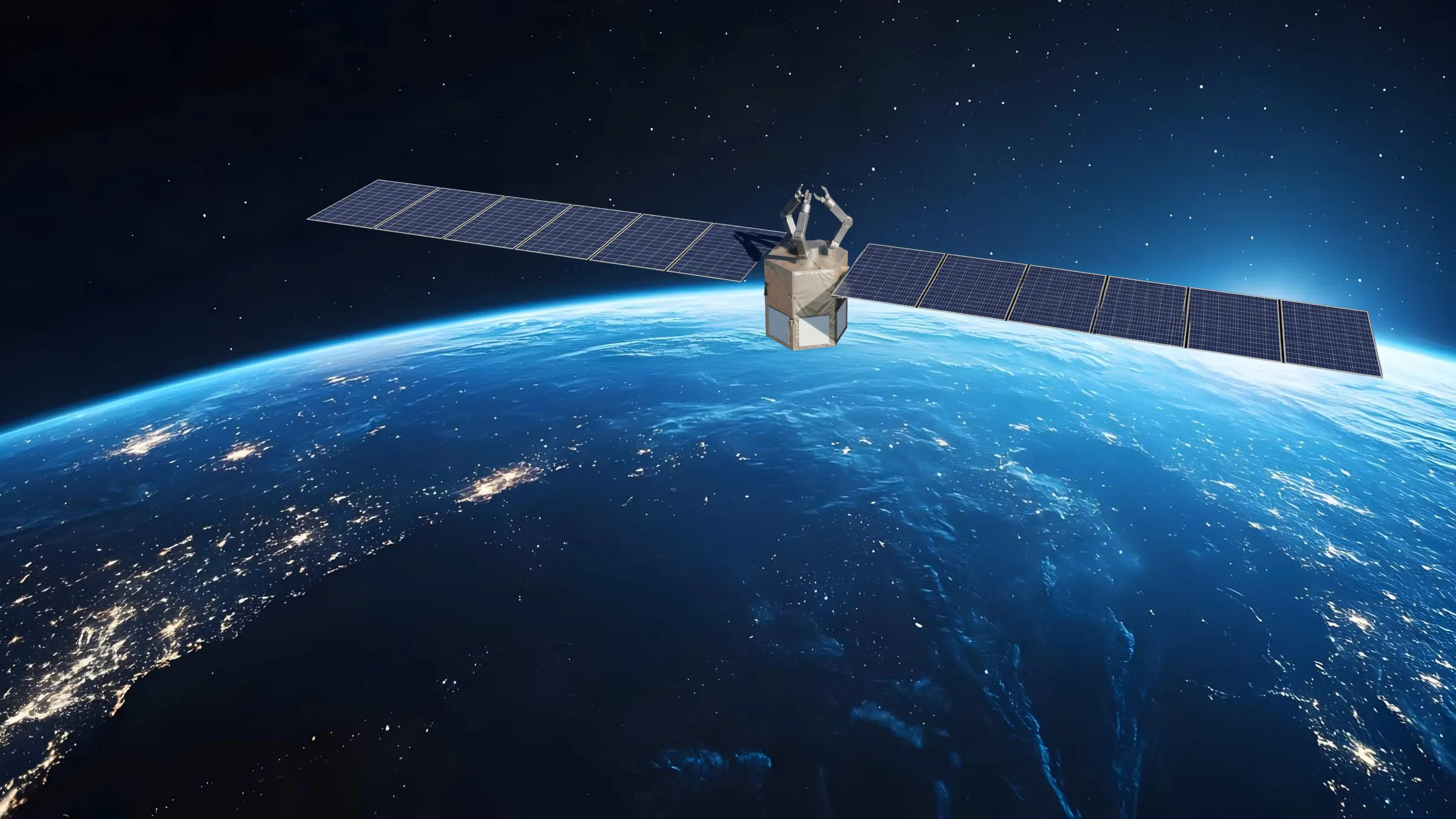
Thorus is the multi-mission orbital transfer vehicle developed by OSMOS X in Bruz, near Rennes, and in Toulouse. It combines large solar arrays, robotic arms to secure client satellites, and HPCR® (High Power Cyclotron Resonance), an electric propulsion technology in which no electrode touches the plasma.
An orbit-raising mission has four steps. Thorus meets the satellite after it separates from the launcher, secures it, raises the orbit along a spiral trajectory and releases it on its operational orbit. It then moves on to its next mission. HPCR® is designed to bring a transfer from LEO to GEO to about three months.
A reduced-scale HPCR® thruster flies in 2027 on a demonstration mission hosted by SpaceLocker. The mission passed its Preliminary Design Review in September 2026. Commercial operations of Thorus are planned for around 2030. You can explore Thorus in 3D.
What to check before booking a transfer
These are the questions our mission team asks first. They also help to compare offers.
- Mass and size of the satellite, and whether it carries a docking fixture.
- Injection orbit and target orbit, including inclination.
- Time budget: how long the satellite can spend in transfer before it starts earning revenue.
- What the satellite still has to do with its own propellant once it arrives.
- Flight heritage of the transfer vehicle and of its propulsion.
If you already have these numbers, the mission form gets you a first assessment.
Our serviceOrbit raising with ThorusFrom the injection orbit to GEO, with the satellite’s propellant kept for its mission.Frequently asked questions
Is an orbital transfer vehicle the same as a space tug?
Yes, both terms describe the same kind of spacecraft. "Space tug" is more common in the press, while most companies and agencies say orbital transfer vehicle.
How long does a transfer from LEO to GEO take?
With chemical propulsion, from hours to a few days. With electric propulsion, several months: four months was the record for an all-electric satellite in 2017. Thorus is designed for about three months.
Can an orbital transfer vehicle move a satellite that was not designed for it?
It has been done. In 2020 a servicing vehicle docked with a commercial geostationary satellite that had no docking interface. Capturing objects without a dedicated interface is also the subject of the TAC (Tactical-Capture) programme coordinated by OSMOS X.
When will Thorus be available?
A reduced-scale version of its propulsion flies in 2027. Commercial operations are planned for around 2030.