
HPCR® propulsion
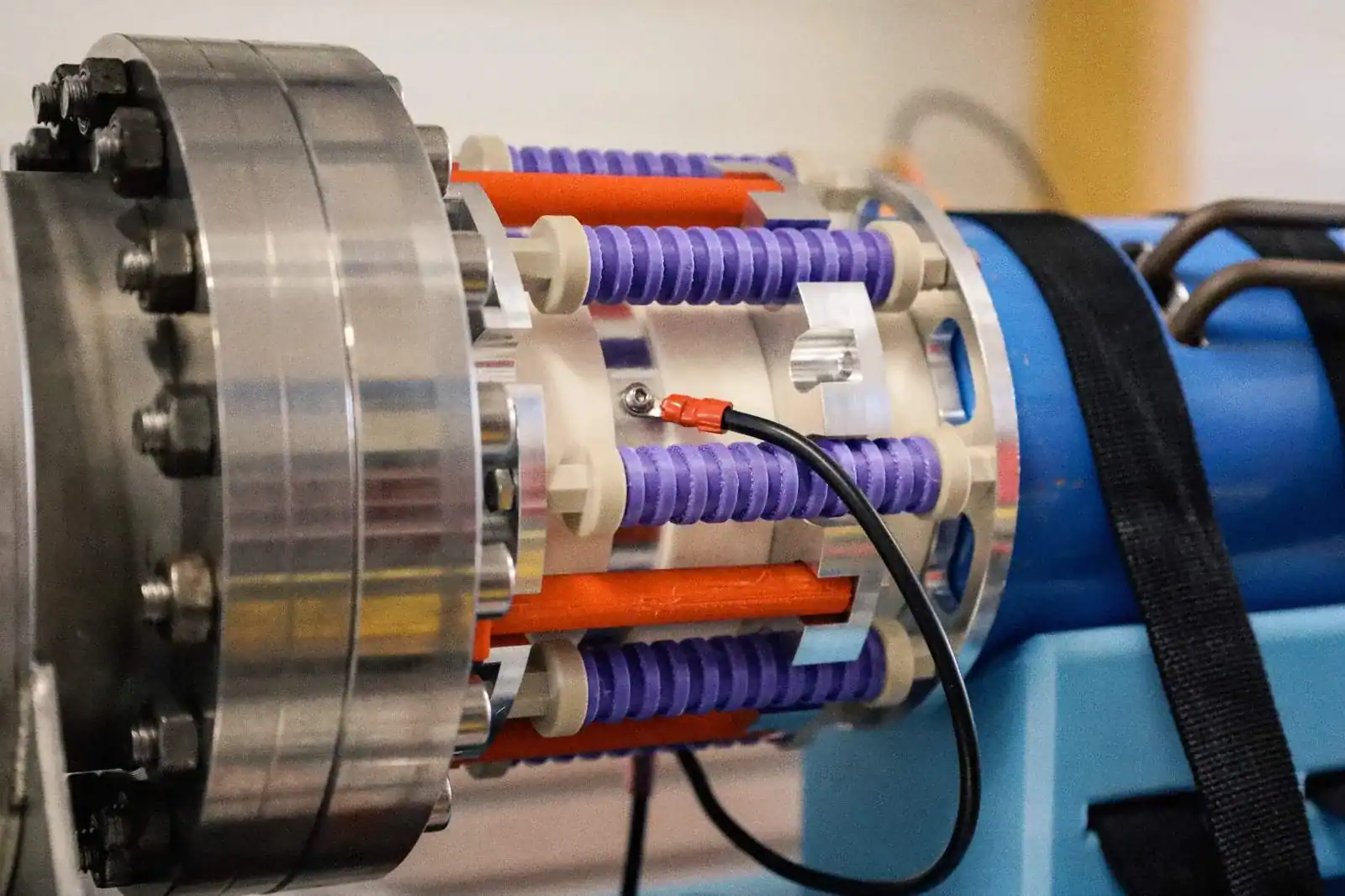
High Power Cyclotron Resonance is the electric propulsion at the heart of Thorus, developed and tested by OSMOS X in Bruz.
Chemical engines are fast and consume a lot of propellant. Conventional electric thrusters are frugal and slow. HPCR® is designed to keep the propellant economy of electric propulsion with more power, for transfers measured in months.
High thrust
Short, powerful burns, at the cost of large amounts of propellant. The right tool for launch.
Frugal, slow
Very little propellant at low thrust. A transfer from LEO to GEO typically takes many months.
Frugal, with more power
Propellant economy with enough power to bring a LEO to GEO transfer to about three months.
From gas to thrust
No electrode touches the plasma, so there is no electrode to wear out.
The gas becomes plasma
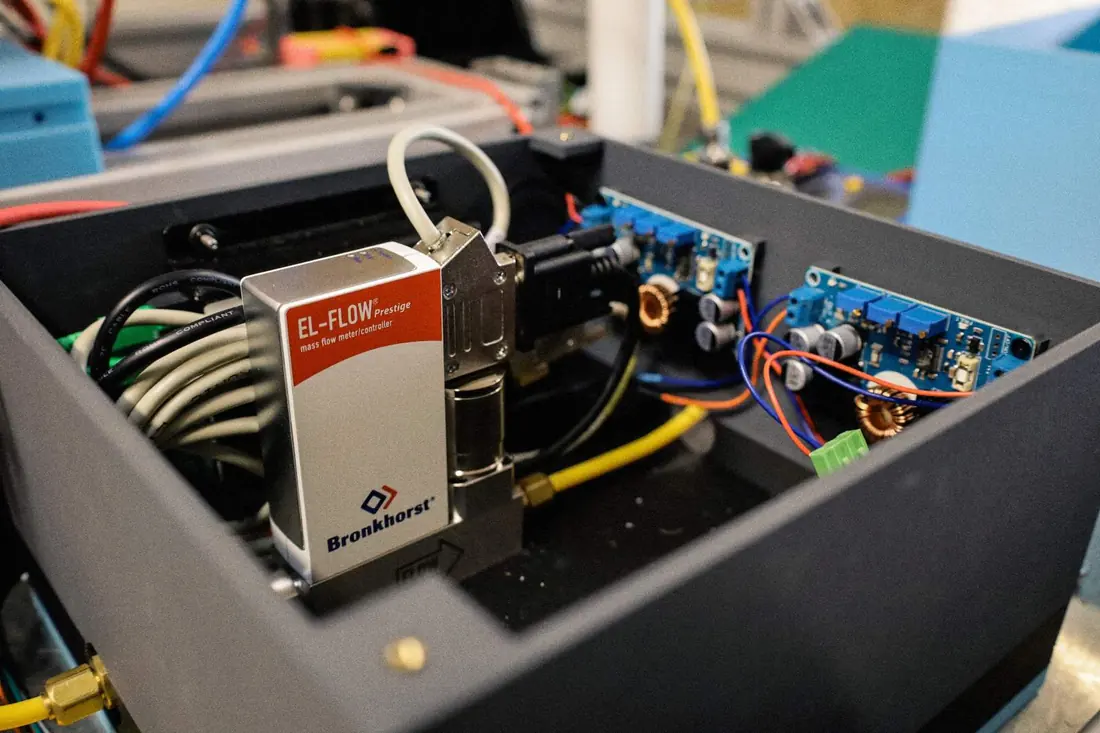
A neutral gas enters the thruster and is ionised by high-frequency electromagnetic waves, held by magnetic fields.
The plasma becomes thrust
The plasma leaves the thruster at high speed. Power and gas flow can be tuned towards more thrust or a higher specific impulse.
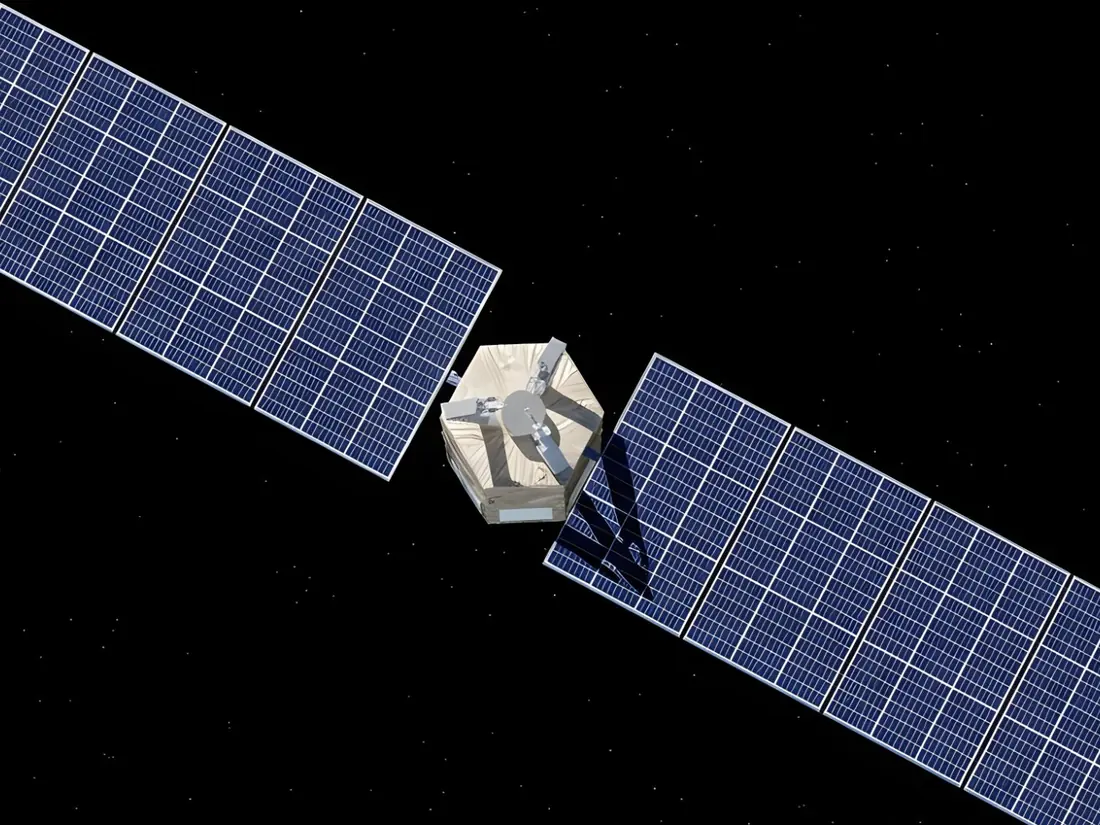
More missions per vehicle
The same tank of propellant covers about three times as many missions as a conventional transfer.
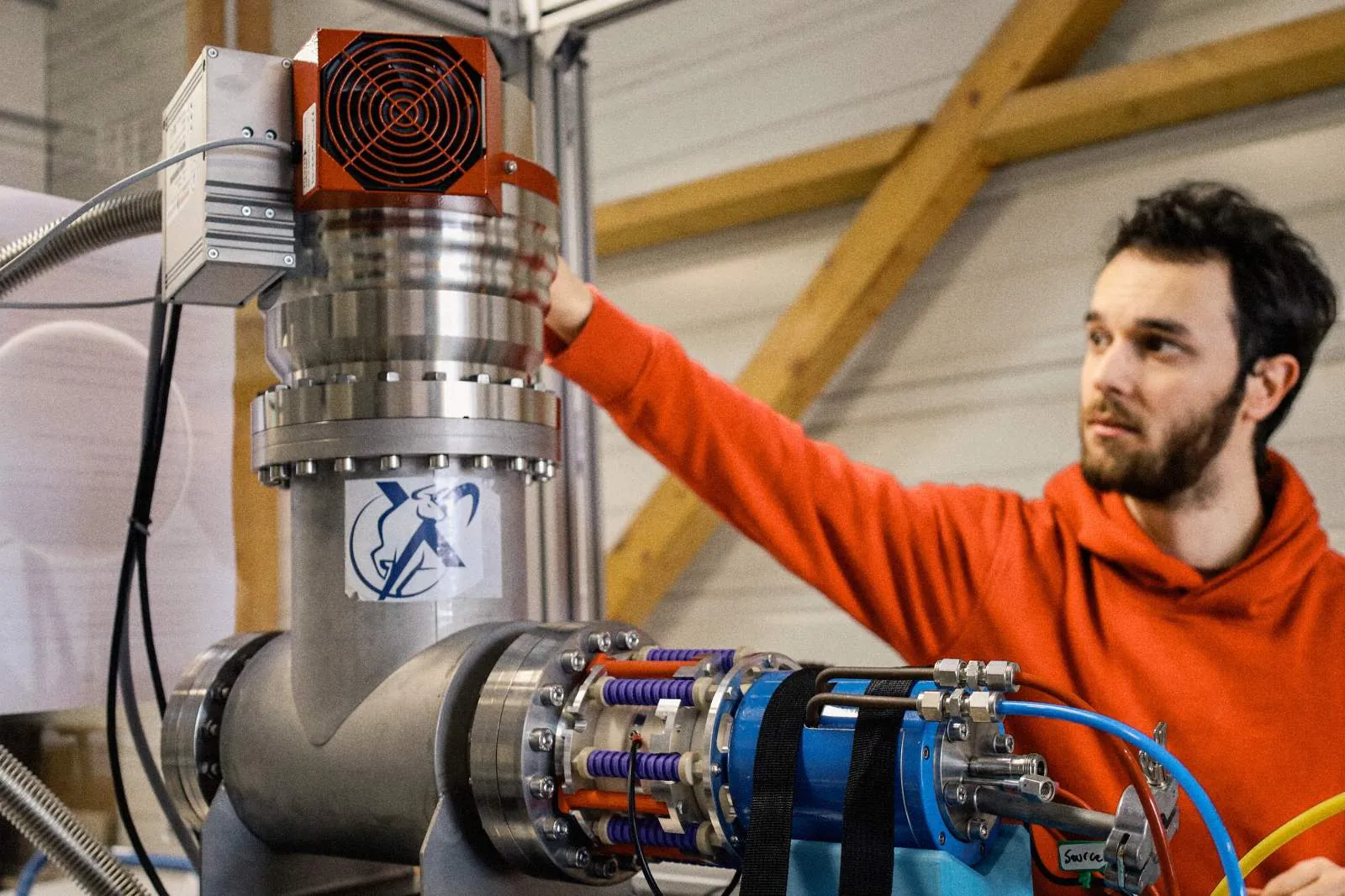
A research ion source, redesigned for space
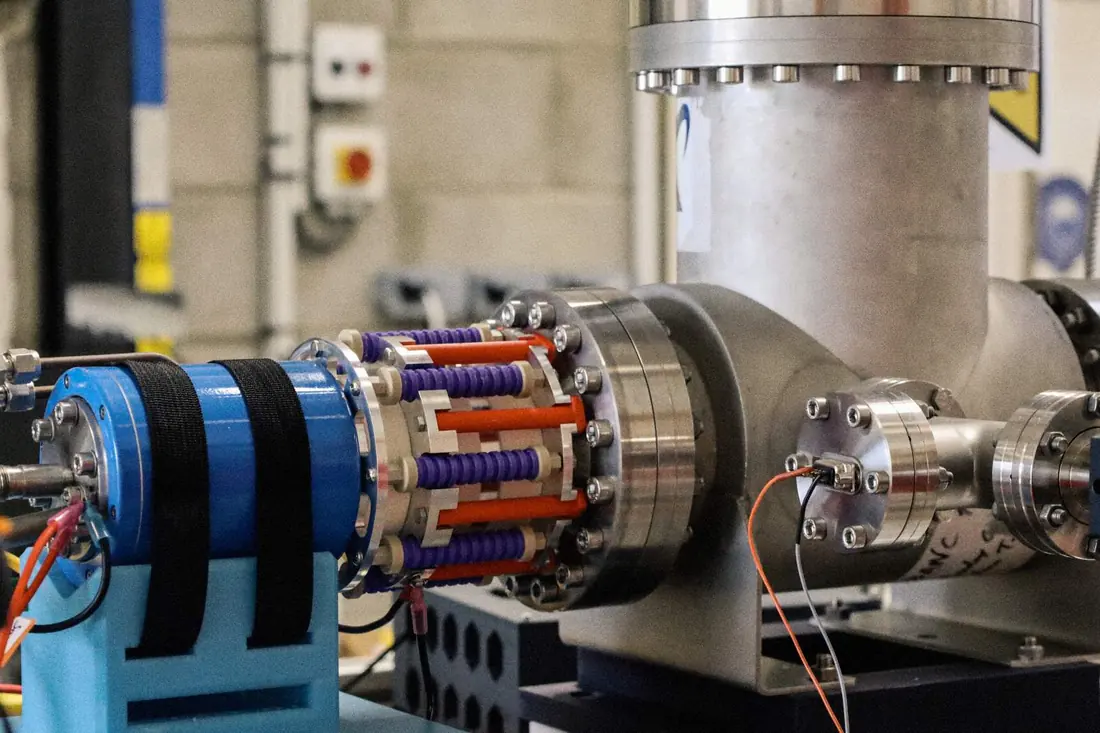
The thruster that flies in 2027 was designed by OSMOS X from an ion source used in fundamental research. The extraction system was replaced and the antenna redesigned: in orbit there is no air to cool it, and every excess watt has to be radiated away.
Some of the equipment this type of propulsion needs is still rare in Europe. OSMOS X built that supply chain at the same time as the thruster.
We started from a laboratory ion source, and we had to rework most of it to make it fit for flight.
Antoine Rescourio · Propulsion Programme Director

Let's talk about your mission.
Tell us about the satellite, the orbit it needs and your timeline. Our mission team comes back to you with a first assessment.